Reviewed and updated by headcount editorial staff on 8 January 2026
Ah, the life science industry in 2026. If you thought it was all lab coats and pipettes, think again. 2026 is shaping up to be a rollercoaster of innovation, AI-driven madness, and mind-blowing discoveries that make sci-fi movies look outdated. And where there’s disruption, there’s transformation. The rapid evolution of science and technology is redefining the industry, pushing boundaries and introducing groundbreaking solutions to some of humanity’s most pressing challenges.
From pharma to medtech, from biotech to healthcare, every sector is experiencing a massive shift.
Digitalization, automation, and AI are no longer futuristic concepts but essential tools for survival.
Companies that fail to adapt risk being left behind, while those that embrace change are setting new benchmarks. Let’s dive into the six major trends redefining the industry.
- 1. Digital Health: the App-ocalypse is here
- 2. Personalized Medicine: because the one-size-fits-all (patient) is dead
- 3. AI & Big Data: the nerds have officially taken over
- 4. Neuroscience: because brains are still a mystery
- 5. Next-Gen therapeutic platforms: ADCs, radioligands & advanced therapies go mainstream
- 6. Data governance becomes a strategic differentiator
- 7. M&A in life sciences: buyouts, mergers, and power moves
- The life science job market: buckle up, it’s getting wild
- The bottom line: the future is now
1. Digital Health: the App-ocalypse is here
Remember when you had to actually visit a doctor to get a check-up? Those were the dark ages. With digital health going full throttle, the entire healthcare ecosystem is shifting online. Telemedicine, wearable tech, and AI-driven diagnostics are the new normal. Patients expect instant, 24/7 healthcare, much like they expect same-day Amazon deliveries.
Key drivers of digital health include:
- Telemedicine
Remote consultations are reducing wait times and expanding access to care. - Wearable Tech
Devices tracking heart rate, glucose levels, and even sleep patterns are providing real-time health insights. - AI Diagnostics
Machine learning algorithms are detecting diseases faster and more accurately than human doctors.
Remote healthcare isn’t just a matter of convenience—it’s a necessity. The rising demand for accessible medical services, coupled with advancements in AI diagnostics, is fueling this trend. AI-powered imaging tools are now capable of detecting diseases like cancer earlier than traditional methods. Wearable devices continuously monitor real-time health data, reducing hospital visits and providing physicians with a steady stream of information to improve patient care. The global digital health market is expected to reach $946 billion by 20301, showing just how much momentum this sector has gained.

2. Personalized Medicine: because the one-size-fits-all (patient) is dead
Gone are the days when everyone got the same generic treatment. One of the main trends in life science is personalization: it’s all about precision medicine—tailoring treatments to your DNA, lifestyle, and even how much coffee you drink (okay, maybe not yet, but soon). The rise of genomics, biomarker-based therapies, and AI-driven drug discovery has turned medicine into a highly customized experience.
Targeted therapies are now dominating drug pipelines, particularly in oncology. Advances in CRISPR technology are enabling precise gene editing, holding the promise of curing genetic disorders rather than just treating symptoms. Meanwhile, AI-driven algorithms are helping match patients with optimal treatment plans by analyzing thousands of data points in seconds. The impact of personalized medicine is not limited to pharmaceuticals. Nutrition, mental health treatments, and even dermatology are leveraging genetic insights to develop individualized interventions. The precision medicine market is projected to grow at an impressive pace, reaching 470.53 billion by 20342.
3. AI & Big Data: the nerds have officially taken over
AI is running the show in biotech, pharma, and healthcare – and in any other place, as AI-recruiting shows. From predicting disease outbreaks to developing new drugs in record time, machine learning and big data are the ultimate game-changers. It’s like having a crystal ball, but one that actually works.
AI-driven platforms are screening millions of compounds to identify promising drug candidates, dramatically accelerating the research process. Predictive analytics are reducing costly trial-and-error phases in R&D, helping companies make data-backed decisions with unprecedented accuracy. AI’s impact isn’t limited to research—it’s also revolutionizing hospital operations.
By the end of 2025, big data analytics in healthcare was expected to reach a valuation of $69 billion3, a testament to how crucial this technology has become.
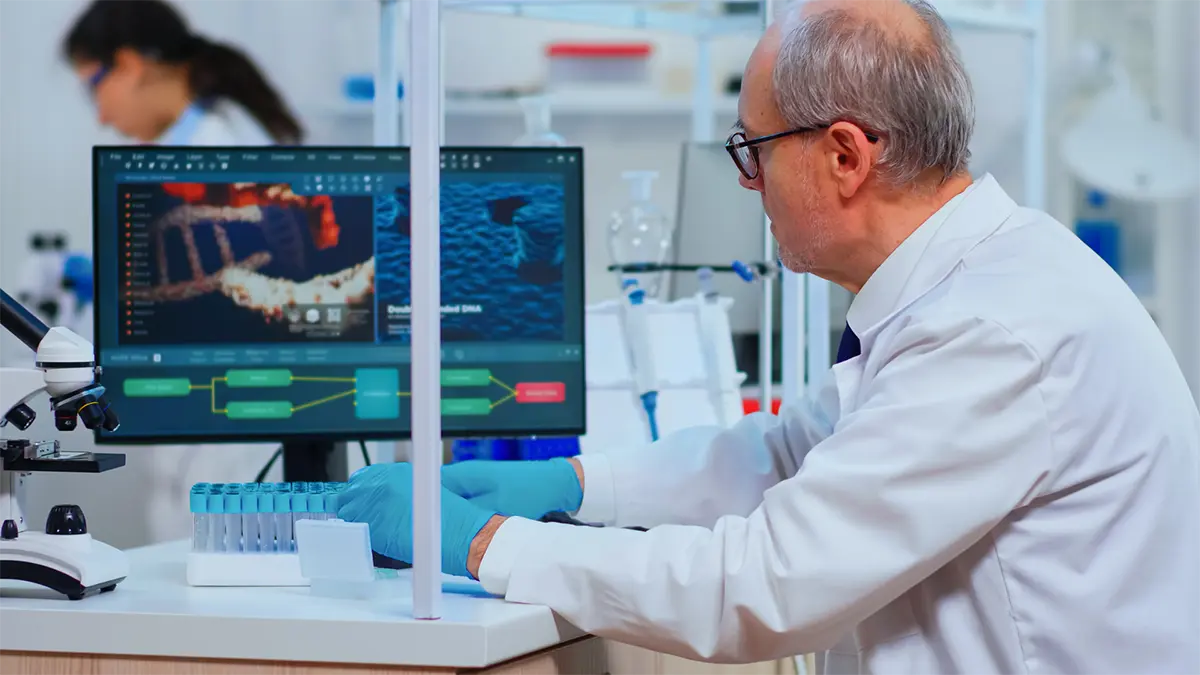
AI’s role in Drug Discovery and Diagnostics
One of the most impressive applications of AI in life sciences is in drug discovery. Traditional drug development can take a decade and billions of dollars, but AI-powered platforms are dramatically cutting down this timeline and costs. Some companies are using AI to predict protein structures and identify potential drug candidates in mere weeks. In diagnostics, AI models are now capable of detecting early signs of diseases such as cancer, Alzheimer’s, and cardiovascular conditions with accuracy that rivals human doctors. We discussed deeper the incredible opportunities of the integration of AI in biotechnology here.
4. Neuroscience: because brains are still a mystery
We’ve mapped the human genome, but our brains? Still a black box of mysteries. Neuroscience is on fire, with breakthroughs in neurodegenerative disease treatments, brain-computer interfaces (hello, cyborg future), and mental health solutions. Investors are throwing money at anything that promises to decode the brain.
Key areas of focus in neuroscience research include:
- Brain-Computer Interfaces (BCIs)
These systems allow direct communication between the brain and external devices, with potential applications for mobility-impaired individuals. - Psychedelic Therapies
Substances like psilocybin and MDMA are showing promise in clinical trials for treating PTSD and depression. - Neurodegenerative Disease Research
Advances in biomarkers and targeted treatments are bringing hope for Alzheimer’s and Parkinson’s patients.
The neuroscience market is forecasted to exceed $11.1 billion by 20264, fueled by increased research funding and the development of innovative therapies.

5. Next-Gen therapeutic platforms: ADCs, radioligands & advanced therapies go mainstream
If you thought biologics were the last big wave, 2026 is proving otherwise. The real shift now comes from next-generation therapeutic platforms – ADCs, radioligand therapies, and advanced cell & gene modalities, moving from niche innovation to commercial reality. And they’re dragging the entire industry into a new technical era.
ADCs are exploding in demand. The market is projected to be USD 32.11 billion in 2033, with nearly every major pharma now running multiple ADC programs. This isn’t plug-and-play science, high-potency APIs, complex linker technologies, and aseptic handling require specialised GMP infrastructure and teams that are hard to hire.
Radioligand therapies are scaling even faster. Global RLT demand is pushing radioisotope supply to breaking point, with the radiopharmaceutical market growing at >17% CAGR. Companies are racing to build hot cells, expand isotope manufacturing, and recruit people who can run highly regulated radioactive workflows without shutting down entire facilities.
Meanwhile, cell & gene therapies continue industrialising. The CGT pipeline is valued above USD 39.61 billion, and the technical burden – from autologous manufacturing to cold-chain logistics, is forcing companies to redesign processes, cleanrooms, and QA frameworks.
The takeaway is simple: next-gen therapeutics aren’t just changing what gets developed, they’re reshaping how life science companies operate. Hiring, manufacturing, compliance, and infrastructure are all being rebuilt around these modalities. And in 2026, the winners will be the organisations that scale their capabilities the fastest.
6. Data governance becomes a strategic differentiator
By 2026, life science organisations have accepted a reality they can no longer bypass: without strong data governance, AI adoption stalls, regulatory risk increases, and cross-functional collaboration becomes chaotic. What once seemed like an IT or compliance topic is now firmly positioned as a strategic priority with direct implications for competitiveness.
Companies are realising that data quality, interoperability and stewardship are prerequisites for every major initiative, from RWE programmes to omnichannel engagement, from companion diagnostics to AI-driven decision support. The proliferation of data sources (EHRs, wearables, decentralised trials, patient-generated data) means that organisations must establish clearer standards for ingestion, enrichment, access controls and validation.
Regulators are tightening their expectations as well. Health authorities expect transparent audit trails, robust documentation of training datasets, and demonstrable safeguards against bias in AI-supported processes. Meanwhile, partnerships with hospitals, tech providers and research networks require companies to show that they can handle shared datasets reliably and ethically.
As a result, competitive advantage in 2026 will increasingly come from the companies that treat data governance not as a constraint, but as an enabler, those that invest early in common data models, cross-functional stewardship roles, and governance frameworks that make high-quality data available to the right people at the right time. In a landscape driven by digital transformation and AI, the organisations that master data discipline will be the ones able to scale innovation efficiently.
7. M&A in life sciences: buyouts, mergers, and power moves
Consolidation is the name of the game. With biotech startups popping up like mushrooms, big pharma is on a shopping spree. Mergers and acquisitions (M&A) are reshaping the landscape, leading to new power players in the industry. For professionals, that means both opportunity and chaos—depending on which side of the deal you land on.
Pharmaceutical giants are snapping up smaller biotech firms to expand their R&D pipelines, gaining access to breakthrough technologies and innovative treatments. Cross-industry collaborations, such as pharma-tech partnerships, are becoming more common as companies seek to integrate AI and data analytics into drug development. The total value of M&A activity in life sciences is projected to grow in 2026, making this one of the most financially dynamic aspects of the industry.
The life science job market: buckle up, it's getting wild
The rapid transformation of the life science industry is fundamentally changing the way companies hire talent. The increasing integration of AI, robotics, and digital health means that traditional roles are evolving, and new job categories are emerging. Companies are no longer just looking for specialists in biology or chemistry—they need experts who can navigate the intersection of technology and life sciences. Data scientists, bioengineers, and AI ethics specialists will become some of the most sought-after professionals in the field.
Employers are placing greater emphasis on adaptability, interdisciplinary expertise, and digital fluency.
Remote and hybrid work models are becoming the norm, particularly in R&D and clinical trials. Companies that fail to modernize their hiring strategies risk falling behind in the talent race. The future of life science recruiting is about finding individuals who can bridge the gap between biology, data science, and engineering—because the industry is no longer just about science; it’s about integration, innovation, and agility.
The bottom line: the future is now
2026 is shaping up to be the most exciting (and chaotic) year for life sciences. Whether you’re a biotech CEO looking for the next AI breakthrough, a medtech startup pushing robotics to the next level, or a scientist wondering how to leverage big data—there’s no shortage of opportunities. The industry is changing faster than ever, and with that comes a wave of new roles, skills, and hiring needs.
Recruiting in life sciences is about to get much more competitive. The future isn’t just coming; it’s already here. Time to embrace the revolution and contact us to hire the best-fit talent to ride these crazy industry trends.
1: Gran View Research, Global Digital Health Market Size Forecast 2030. Available at: https://www.grandviewresearch.com/industry-analysis/digital-health-market.
2: Precedence Research, Precision Medicine Market Size | Share and Trends 2024 to 2034, available at: https://www.precedenceresearch.com/precision-medicine-market.
3: McKinsey, Precision Medicine Opening Aperture Report, https://www.mckinsey.com/industries/life-sciences/our-insights/precision-medicine-opening-the-aperture.
4: Deloitte, Global Neuroscience Market Investment Report (2023) Available at: https://www2.deloitte.com/us/en/insights/industry/health-care/global-neuroscience-market-investment-report.html.
5: Frost & Sullivan, Non-surgical Healthcare Robots Sector, Global, 2024 2028, Available at: https://store.frost.com/non-surgical-healthcare-robots-sector-global-2024-2028.html.
Grand View Research, Antibody Drug Conjugates Market (2025 – 2033). Available at: https://www.grandviewresearch.com/industry-analysis/antibody-drug-conjugates-market.
Precedence Research, Radiopharmaceuticals Market Size and Forecast 2025 to 2034. Available at: https://www.precedenceresearch.com/radiopharmaceuticals-market.
Precedence Research, Cell and Gene Therapy Market Size and Forecast 2025 to 2034. Available at: https://www.precedenceresearch.com/cell-and-gene-therapy-market.
FAQs – Contracting in life sciences
What are the most important life science trends in 2026?
A: Digital health, personalised medicine, AI-driven R&D, neuroscience breakthroughs, next-gen therapeutic platforms (ADCs, radioligands, CGT), stronger data governance, and continued M&A consolidation.
Why is digital health growing so fast?
A: Because on-demand care is now the baseline. Telemedicine, wearables and AI diagnostics reduce costs, expand access and give clinicians real-time data. Patients expect immediacy, and providers can no longer ignore it.
Is personalised medicine really becoming mainstream?
A: – Yes. Genomics, biomarkers and advanced analytics are driving targeted therapies, especially in oncology. CRISPR and AI-matching algorithms are accelerating the shift from “one-size-fits-all” to precision interventions.
How is AI changing drug development?
A: AI tools screen compounds, predict structures, optimise clinical design and spot early disease signals. This compresses timelines and cuts costs across discovery, trials, and diagnostics.
Why is neuroscience getting so much attention?
A: Because demand for solutions across mental health, neurodegeneration and BCIs is exploding. New biomarkers, psychedelic-assisted therapies and brain-computer interface research are attracting heavy investment.
What makes ADCs, radioligands and CGT such a big deal for 2026?
A: They’re no longer niche. These modalities require specialised GMP facilities, stringent regulatory controls and hard-to-find technical talent—reshaping manufacturing, QA and hiring across the sector.
Why is data governance now a strategic priority?
A: Because without clean, interoperable and well-governed data, AI adoption stalls and regulatory risk spikes. Companies need strong standards, shared frameworks and transparent data lifecycles to stay competitive.
What’s driving M&A activity?
A: Big pharma needs innovation. Acquiring biotech pipelines and partnering with tech providers is faster than building in-house. As valuations stabilise, 2026 is set for continued consolidation.
How is the life science job market evolving?
A: Hybrid roles are exploding: bioengineers with data skills, computational biologists, AI specialists, radiopharma operators, and CGT manufacturing experts. Talent shortages are pushing companies to rethink hiring strategies.
What’s the key takeaway for companies in 2026?
A: Adapt or get squeezed out. Organisations that invest in digitalisation, data discipline, and next-gen technical capabilities will move fastest—and win.
listen to our podcast leadership lab
headcount editorial staff