Freelancing in life sciences is not a trend but the outcome of deep structural shifts that have been building for almost ten years. Across Switzerland and Europe, companies are struggling with scientific complexity, regulatory expansion, digital transformation, and rising cost pressure—a mix that traditional full-time teams simply can’t keep up with.
The data speaks clearly. The medical affairs outsourcing market is projected to reach USD 3.73 billion by 2030. Medical writing is expected to grow to USD 6.9 billion in the same period. Biotechnology is expanding at a CAGR of 13.96%, approaching USD 4 trillion globally. When industries scale this fast, labour demand inevitably outpaces supply.
Switzerland magnifies the trend: high employment costs, strict headcount controls, Swissmedic requirements, and dense clusters of global hubs push companies to rely on flexible specialists. Europe follows the same pattern, with fragmented regulations, slow hiring cycles, and rapid digitalisation making freelancers essential.
This analysis explores both the roles rising in demand and the forces reshaping the talent market—and what they mean for the life sciences workforce heading into 2026.
In this article:
- 1. Medical functions have become strategic engines of evidence and insight
- 2. European biotech runs on flexible talent because funding cycles demand agility
- 3. Pharma manufacturing in Europe is under pressure, and contractors are the safety mechanism
- Europe’s traditional workforce model can no longer handle scientific complexity – the hard truth
- Freelancing is becoming the backbone of scientific work in Europe – time to hop on
1. Medical functions have become strategic engines of evidence and insight
Medical Affairs used to be the quiet team down the corridor — smart, invisible, mostly unbothered. Today, it is the scientific engine room of the entire organisation. It shapes evidence strategy, drives credibility with healthcare professionals, supports launches, and acts as the internal compass for everything involving data, science and external engagement. McKinsey predicts that Medical Affairs will be a core driver of value creation by 2030.
As a result, the workload has exploded. Scientific output has multiplied, regulators want transparency at industrial scale, and real-world evidence is now a continuous stream rather than a post-marketing afterthought. Digital engagement requires more content than most teams can physically produce. Add label expansions and new indications, and you get predictable periods of chaos.
Internal teams are overwhelmed because the job has changed — but the recruiting process hasn’t.
- Scientific data volume grows faster than capacity to process it.
- EMA and FDA documentation expectations absorb months of internal time.
- RWE and post-marketing commitments require ongoing scientific interpretation.
- Digital channels need high-quality content at a pace no internal team can realistically sustain.
In Switzerland and the EU, most departments were simply not designed for this level of scientific output. The math does not work; the workload does not shrink.
The freelance medical roles growing fastest
Companies now rely on freelancers the same way clinicians rely on paracetamol: constantly, for multiple reasons, and often urgently.
The most in-demand roles include:
- Medical writers across clinical, regulatory, scientific and digital streams, where volume consistently outpaces internal staffing.
- Regulatory Affairs specialists managing filings, variations, CMC updates, ATMP pathways and global submissions.
- Medical Affairs consultants supporting scientific strategy, launch readiness, evidence planning and omnichannel content.
Medical writing’s projected USD 6.9 billion market is not a surprise — it’s a symptom of a structural mismatch between what companies must deliver and what their internal teams can handle. Having a hard time choosing between a Medical and Regulatory Affairs career? It’s probably time to read our guide.
2. European biotech runs on flexible talent because funding cycles demand agility
European biotechs have a different metabolism compared to their US counterparts. Here, investors are cautious, capital is less aggressive, and public markets require more patience than most scientific timelines allow. This creates a simple dynamic: biotechs hire slowly, outsource heavily, and scale only when their next milestone allows it.
When resources are tied to funding rounds and clinical phases, flexibility becomes a survival strategy. And Switzerland amplifies this reality: Basel, Zurich and Lausanne host ecosystems where early-stage companies run with lean internal staff and a striking number of external experts.
Why are freelancers essential to European and Swiss biotech?
- Specialist skills are needed only during short, intense phases (IND packages, preclinical bursts, new modality exploration).
- Platform companies in mRNA, gene editing or cell therapy need computational experts they cannot afford permanently.
- Biostatistics and bioinformatics workloads spike around trials and vanish right after.
- Hiring freezes do not align with scientific timelines — but freelancers do.
These roles aren’t “optional support.” In many biotechs, freelancers are the team.
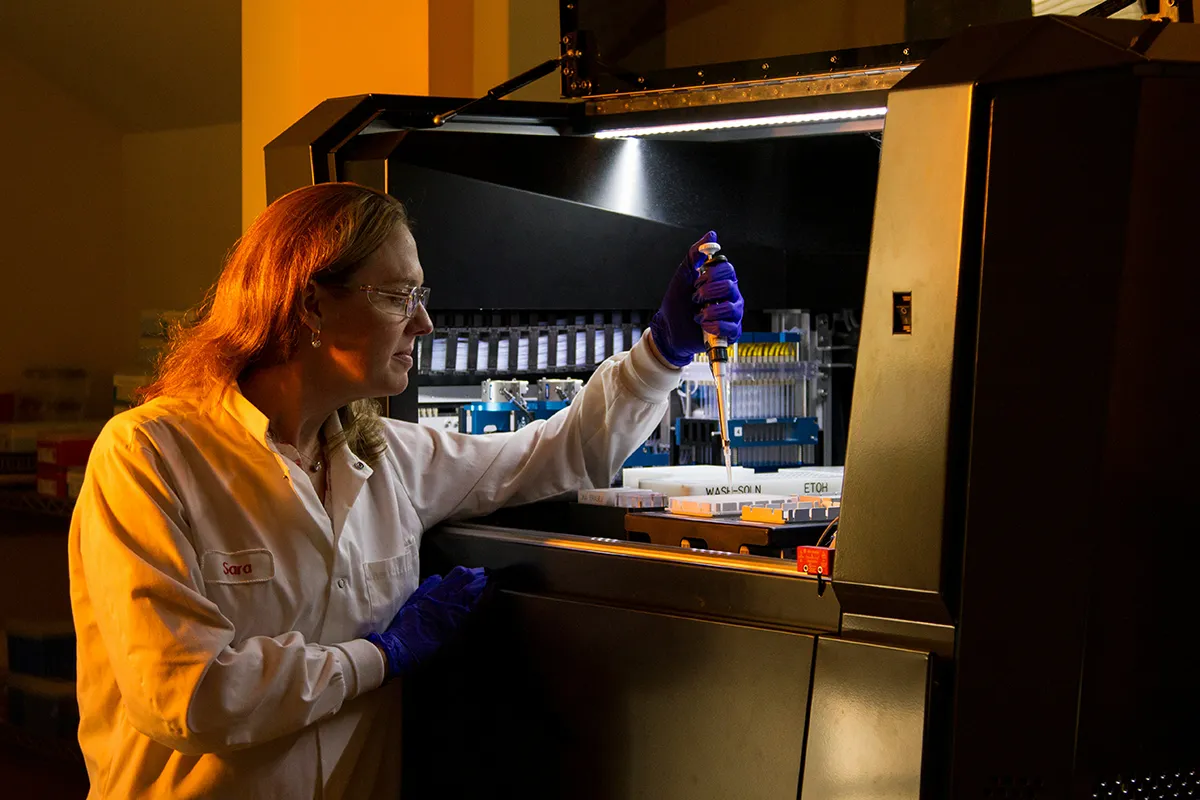
The freelance biotech roles growing fastest
The most requested profiles include:
- Biostatisticians for trial design, SAPs and interim analyses.
- Bioinformatics specialists managing and scaling omics pipelines.
- Computational biologists supporting model development and data interpretation.
- Preclinical strategy consultants guiding IND-enabling packages.
- Tech transfer and method development experts supporting rapid scale-up phases.
In Switzerland, early-stage biotechs in Basel, Zurich and Lausanne rely so heavily on freelancers that some operate with more external experts than employees. The flexible workforce is built into their cost models.
3. Pharma manufacturing in Europe is under pressure, and contractors are the safety mechanism
Manufacturing in Europe is being reshaped by a perfect storm: new contamination control expectations (hello Annex 1), rising demand for sterile production, digitalisation of legacy systems and the global shift toward biologics and ATMPs.
These transitions require expertise that permanent teams rarely have in-house — and the timelines do not care whether HR has approved a new position.
Sp contractors have become essential across European and Swiss manufacturing sites for a simple reason: internal teams can’t keep up with the pace and complexity of current demands.
Every major upgrade now requires specialised engineers with deep automation and GxP expertise.
When companies build new facilities, expand existing ones or remediate issues, validation workloads surge far beyond what permanent staff can absorb.
At the same time, data integrity expectations are increasing, putting pressure on QA teams that are already stretched. And as manufacturing goes digital, companies need highly technical, temporary skill sets—MES, PCS, CSV and digital system engineering—that are critical during specific project phases but not sustainable to maintain in-house permanently.
It’s no surprise, then, that validation outsourcing has become a multibillion-dollar market segment (GVR, 2024d). It’s the clearest sign that contractors aren’t a nice-to-have: they’re the mechanism that keeps European and Swiss manufacturing timelines on track.

The freelance roles stabilising manufacturing operations
The most sought-after specialists include:
- CSV analysts, digital system engineers and Pharma 4.0 consultants.
- Process, equipment and cleaning validation engineers managing peaks in qualification work.
- QA specialists supporting CAPA backlogs, deviation management and audit readiness.
- MES and PCS experts guiding digital transitions across sites.
In Switzerland, many manufacturing projects would immediately lose regulatory compliance without external support.
Europe’s traditional workforce model can no longer handle scientific complexity - the hard truth
Freelancing is growing because the old talent model cannot keep up. The workload increases, regulations diversify, digital systems multiply, and pipelines expand — but internal headcount remains controlled, monitored, and politely frozen.
Europe has the additional complication of fragmented regulations, slower hiring cycles, and strong labour protections. Excellent for stability; terrible for agility. The structural issues driving the shift are:
- Chronic talent shortages across RA, QA, informatics and statistics.
- Hiring cycles slowed by regulatory requirements and works councils.
- High employment costs — especially in Switzerland.
- Digitalisation outrunning internal training.
- A shareholder push to keep headcount flat, even with growing pipelines.
Freelancers (and contracting) are not a cost-cutting tactic. They are risk mitigation, execution insurance and operational sanity.
The freelancers who succeed in this environment
Not all freelancers are created equal — and not all of them thrive in the life science ecosystem. The ones who succeed are those who combine deep expertise with the ability to integrate smoothly into complex, high-pressure environments.
Companies are not looking for “helpful generalists.” They want specialists who reduce uncertainty and deliver scientific clarity without adding noise.
The winning profile includes:
- A niche skill set with measurable outcomes
- Rapid integration into cross-functional teams
- Fluency in scientific, digital and regulatory systems
- Clear communication in global matrix structures
- Understanding of Swiss and EU organisational dynamics
In other words: specialists who make everyone else’s life easier. The European life sciences industry is moving toward a hybrid model where permanent teams handle continuity and governance and freelancers deliver specialist support, urgency and technical depth.
This is not a short-term reaction: it is a new operating structure which will benefit professionals who know how to exploit timing and their skills.
Freelancing is becoming the backbone of scientific work in Europe - time to hop on
The rise of freelancing in life sciences is not a matter of preference—it’s a matter of necessity. Scientific workloads are expanding, regulatory complexity is increasing, digital systems are multiplying, and the pace of innovation shows no signs of slowing. In this environment, traditional staffing models simply cannot keep up, particularly in Switzerland and across Europe.
Flexible talent has become essential. Freelancers ensure regulatory submissions stay on track, enable digital transformation, support facility upgrades, prevent audit delays, and help biotechs navigate their most critical milestones. They provide expertise that companies cannot build quickly and capacity that organizations cannot maintain permanently.
Organizations that embrace this hybrid model gain a clear strategic advantage. They manage complexity with greater resilience, accelerate scientific output, and navigate regulatory challenges more effectively. Professionals who recognize this shift can build careers defined by autonomy, influence, and long-term relevance.
By 2026, freelancing will no longer exist alongside traditional structures—it will be integral to the core operating model of life sciences in Europe. Permanent teams and contractors will operate as a unified talent ecosystem, combining agility, scientific depth, and execution power. The transformation is already underway, and those who adapt early will shape the future of Swiss and European life sciences.